Investing on Oʻahu

Buying investment property,
with real numbers

Aloha, I'm Matt Ball, a REALTOR® with Coldwell Banker Realty in Kailua. I own investment property here too, so I know these decisions from the inside. I help investors buy and sell, and we'll run real numbers on taxes, fees, financing and the rules before you make an offer.

  • I own investment property here too
  • MRP and CFSP designations
  • $27M+ in Oʻahu home sales
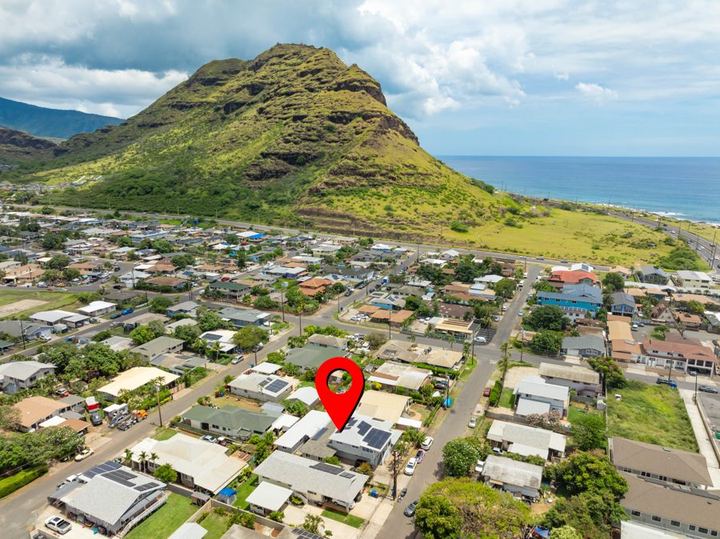
Aerial view of a West Oʻahu neighborhood
$27M+In Oʻahu home sales
95%Of my business, give or take, comes from referrals and past clients
5.0Google rating, from 12 client reviews
MRP and CFSPMilitary Relocation Professional and Certified Full Service Professional

Matthew Ball, REALTOR® RS-83609, Coldwell Banker Realty, Kailua office. Ratings from my Google reviews.

Investing on Oʻahu

How I help investors, step by step

  1. Step 1

    Strategy

    • Long-term growth, a home to live in now and keep later, or a multi-unit property.
    • How long you plan to hold.
  2. Step 2

    Financing

    • Investment loans have their own terms. Talk with a lender early.
    • I can refer you to trusted lenders who work with investors.
  3. Step 3

    Find and run numbers

    • Price, taxes, insurance, fees, repairs and realistic income, before you offer.
  4. Step 4

    Due diligence

    • Inspections, permits, zoning and association rules.
    • I can refer you to trusted inspectors and contractors.
  5. Step 5

    Close and plan ahead

    • Escrow, title and keys.
    • Good records for your CPA, and a plan for when you sell.
The essentials

What to know before you invest

Tap a card for the details.

Income, every cost, and what is left over.

  • Income. I help you buy and sell, and I don't set rents or manage property. If income is part of your plan, get an estimate from a licensed property manager before you offer, and treat it as an estimate, not a promise. I can refer you to property managers I trust.
  • Property tax. Honolulu's residential rate is $3.50 per $1,000 of net taxable value for the tax year July 1, 2026 to June 30, 2027. Homes and condos assessed at $1 million or more with no home exemption are usually taxed as Residential A: $4.00 per $1,000 on the first $1 million and $11.40 per $1,000 above that. A home with no home exemption assessed at $1 million or more falls in Residential A.
  • General excise tax. If you rent it out, rental income is subject to GET at 4.5% of gross rents (4% plus the 0.5% county surcharge). Expenses aren't deductible for GET.
  • Insurance. NAIC's latest report (2023 data) shows an average Hawaii homeowners premium of $1,549 a year. Policies for a home you don't live in differ, so get quotes.
  • The rest. Association fees, repairs, reserves, and your loan payment at today's rates.

Zoning, city rules and building rules decide what you can do with a property.

  • Short-term rentals. On Oʻahu, rentals of less than 30 days are only allowed in resort-zoned areas and certain apartment-zoned areas, or with a nonconforming use certificate, and they must be registered with the city (DPP). Outside those areas, plan on rentals of 30 days or more. Sellers give buyers a short-term rental disclosure form.
  • Taxes on short stays. Rentals of less than 180 consecutive days are also subject to the state transient accommodations tax (11% since January 1, 2026) and the Oʻahu TAT (3%), on top of GET.
  • Building rules. Many condo associations set their own minimum rental terms and pet or guest rules.

More doors, more details to check.

  • Permits. Make sure each unit was built and permitted as a separate unit.
  • Zoning. What the zoning allows on the lot affects what you can add or change later.
  • Living in one unit. Owner-occupant loan options may open up if you live in one unit. Ask your lender.
  • Tenants in place. If the home comes with tenants, review the leases and deposits before you close.

Selling one investment property and buying another.

  • What qualifies. Since 2018, like-kind exchanges apply only to real property held for business or investment.
  • Deadlines. You identify the replacement property within 45 days after you transfer the old one, and receive it within 180 days or by your tax return due date (with extensions), whichever is earlier.
  • HARPTA. A qualifying exchange can be a reason for a HARPTA exemption on the sale.
  • Get help early. Work with a CPA and a qualified intermediary before you list. The rules are strict. I can refer you to trusted CPAs and qualified intermediaries.

Every building has its own numbers and rules.

  • Compare buildings. Prices and what is for sale differ from building to building, so we compare similar units nearby before you offer.
  • Fees and reserves. Maintenance fees can make or break the numbers. We read the budget and reserve study.
  • Building rules. Check the minimum lease term and any limits on leasing before you count on income.

A few rules to plan for. Your CPA has the final word.

  • GET and income tax. Renting Hawaii property is a business activity for GET, and rental income is also subject to Hawaii income tax.
  • When you sell. When the seller isn't a Hawaii resident, the buyer generally withholds 7.25% of the amount realized and sends it to the state (HARPTA). It isn't an extra tax: it's a credit toward the seller's Hawaii income tax, and some sellers qualify for an exemption, for example when the home was the seller's principal residence and the amount realized is $300,000 or less, or in a qualifying 1031 exchange.
  • Foreign sellers. For sellers who are foreign persons, federal FIRPTA rules generally require the buyer to withhold 15% of the amount realized.
In their words

What clients and partners say

Great Dude! Definitely the smoothest transaction, and most professional interaction I've had among multiple property purchases.

Michael H. Google review

Matt takes care of your concerns and concerns you didn't know existed. 10/10 recommend

Mike M. Google review
Quick answers

Frequently asked questions

Yes. I own investment property on Oʻahu, so I know these decisions from the inside, and I'll show you the numbers the same way I'd run my own.

Only in certain areas. Rentals of less than 30 days are allowed in resort-zoned areas and certain apartment-zoned areas, or with a nonconforming use certificate, and they must be registered. Elsewhere, plan on rentals of 30 days or more.

A way to defer tax when you sell investment real estate and buy more. You identify the new property within 45 days and receive it within 180 days, or by your tax return due date if earlier. Work with a CPA and a qualified intermediary. I can refer you to ones I trust.

A higher Honolulu property tax class for homes and condos assessed at $1 million or more with no home exemption. For July 2026 to June 2027 it's $4.00 per $1,000 on the first $1 million and $11.40 above that.

Keep reading

More guides on this site

Where the numbers come from

Sources

This page is general information, not legal, tax, financial or investment advice. Cost and payment figures are estimates for illustration only, not a rate quote or an offer to lend, and your actual costs may be higher. I'm a real estate licensee, not a mortgage lender or loan originator, so get a Loan Estimate from a licensed lender. Zoning, rental rules and tax rates change, so confirm the details with the city, a CPA and your lender. I help with buying and selling only; I don't offer property management or leasing. If you need a lender, CPA, inspector or property manager, I can refer you to trusted professionals. They are independent, and you choose who to work with.

Matt Ball, REALTOR®, with his wife Amanda
Let's talk story

Looking at an investment property?

Send me the address, or just your goals, and we'll run real numbers together. No pressure.

Matthew Ball, REALTOR® RS-83609, Coldwell Banker Realty