
 Facebook
 X
 Pinterest
 Copy Link
Aloha friends,
For a lot of buyers, a condo is the first step into owning a home on Oʻahu. In September 2026, nearly half of the island’s condo sales closed under $500,000. But when you buy a condo, you’re also buying into a building and the association that runs it. Here’s what I walk buyers through before they commit.
Key takeaways
- Your monthly maintenance fee is part of your housing cost. Look at what it covers, not just how big it is.
- The budget summary and reserve study show whether the building is saving enough for big repairs.
- Ask about planned projects like elevators, piping and roofs. They can add tens of thousands of dollars to your cost of ownership.
- Using a VA loan? The condo project has to be approved by VA, so check before you fall in love with a unit.
- Read the house rules for pets, parking, renovations and rentals early.
Where Oʻahu’s condo market stands
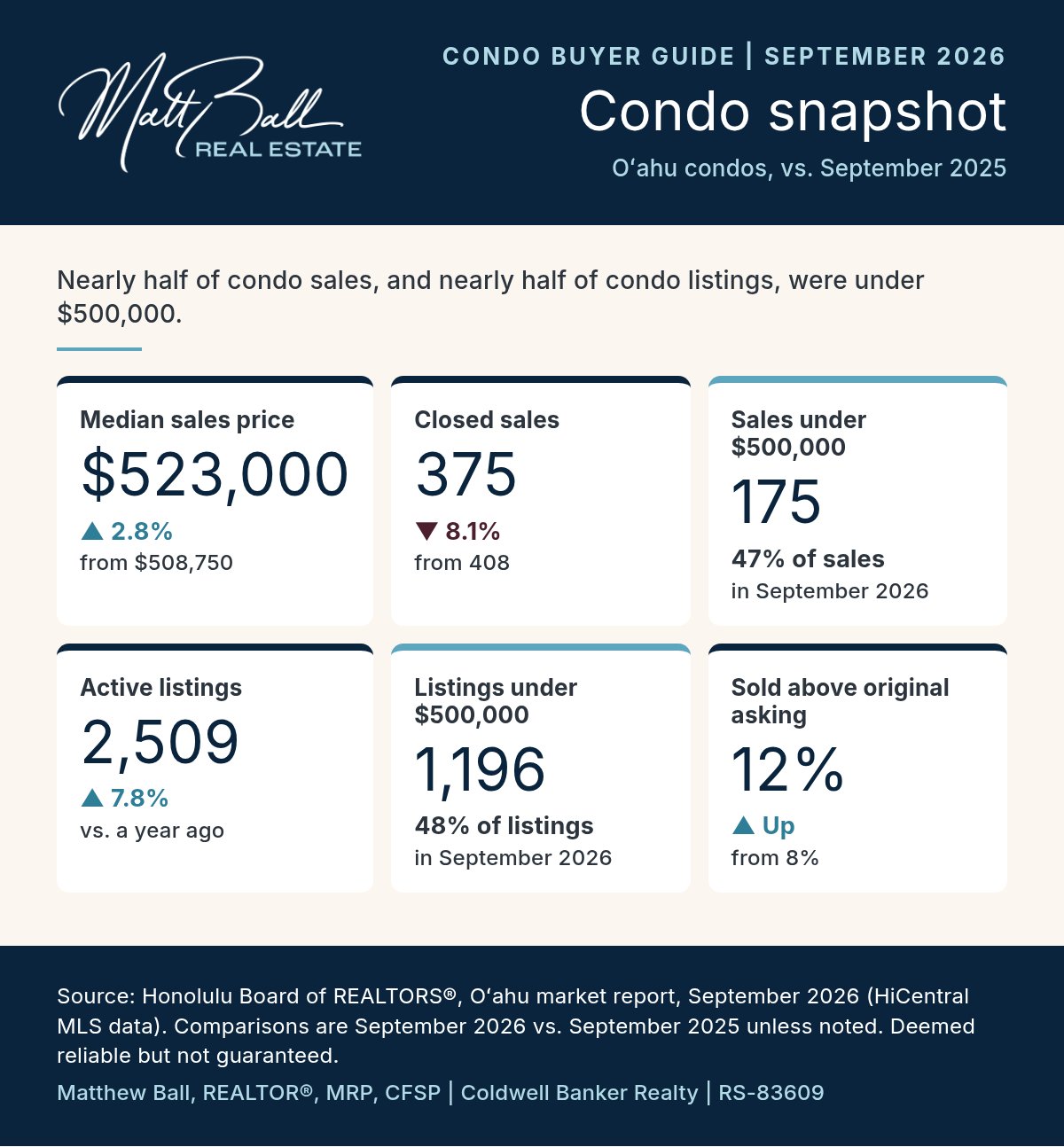
Here’s what the Honolulu Board of REALTORS® reported for Oʻahu condos in September 2026, compared with September 2025:
- Median sales price: $523,000, up 2.8% from $508,750.
- Closed sales: 375, down 8.1% from 408.
- 175 sales (47%) closed under $500,000.
- Active listings: 2,509, up 7.8%, with 1,196 (48%) priced under $500,000.
- Median days on market: 41, compared with 40.
- 12% sold above original asking price, up from 8%.
More listings and fewer sales means buyers have more to choose from right now. That makes this a good time to compare buildings carefully, not just units. You can browse homes and condos for sale on Oʻahu on my site.
What your maintenance fee pays for
Every condo owner pays a monthly maintenance fee to the association, often called the AOUO (association of unit owners). That fee runs the building and saves for its future. Common line items include:
- Insurance for the building and common areas
- Common area electricity, water and sewer
- Landscaping, cleaning, security and staff
- Management and professional fees
- Contributions to the replacement reserves
Some buildings also include utilities like water, sewer or central air in the fee. Others don’t. So two condos at the same price can carry very different fees for good reasons. Ask for the current budget and look at what’s in it. Then plug the fee into my rent vs. buy calculator so you see your real monthly cost.
A lower fee isn’t always a bargain. The Hawaiʻi Real Estate Commission says the most common cause of underfunded reserves is a board trying to keep maintenance fees low, often in response to pressure from owners. Its advice to boards is plain: be prepared to raise maintenance fees annually to keep reserves healthy.
Reserves: the number that tells you the most
Reserves are the building’s savings for big, predictable repairs. Hawaiʻi law says reserves cover the parts of the property the association maintains, including roofs, walls, decks, paving and equipment. Here’s what the law requires:
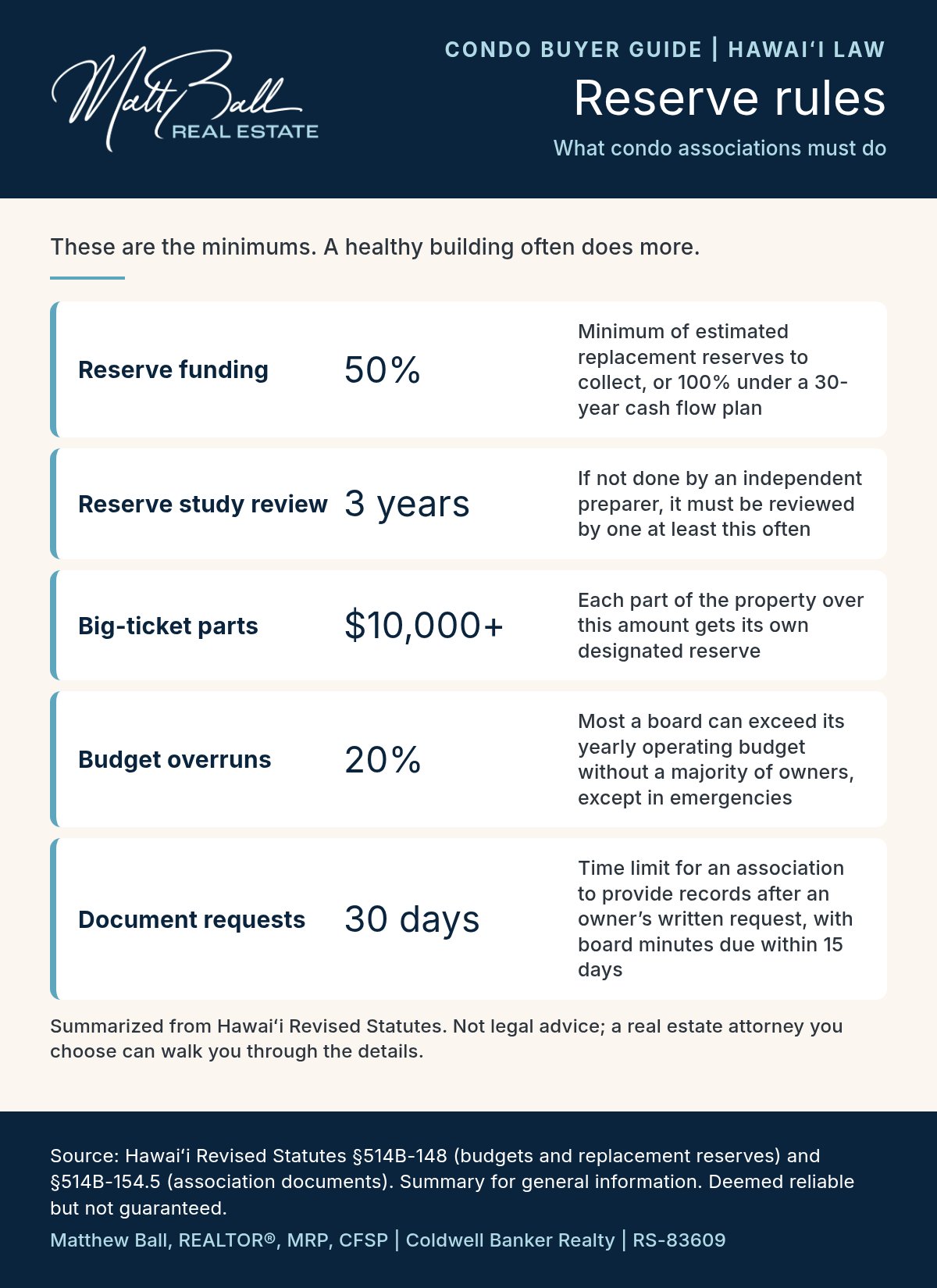
- The yearly budget has to include a summary with the reserve fund balance and the estimated reserve assessments, based on a reserve study.
- If the reserve study isn’t prepared by an independent reserve study preparer, one has to review it at least every three years.
- The association must collect at least 50% of the estimated replacement reserves, or 100% if it uses a cash flow plan, which is a 30-year projection.
- Any part of the property with repair or replacement costs over $10,000 gets its own designated reserve.
- Except in emergencies, a board can’t go more than 20% over its yearly operating budget without approval from a majority of owners.
- On Oʻahu, the budget also has to show estimated costs of fire safety equipment or installations needed to meet the county’s building fire and life safety evaluation.
When you read the budget summary, compare what the reserve study recommends with what the association is actually collecting. The law also asks the budget to explain if the association collected less than the study called for and how that affects future assessments. That one paragraph can tell you a lot.
Healthy reserves matter beyond repairs, too. The Real Estate Commission notes that low reserves can make it harder for an association to get insurance coverage and can lead to higher costs for owners.
Ask about big repairs before you buy
The Real Estate Commission puts it this way: major repairs and replacements, such as elevators, piping and roofing, “can potentially add tens of thousands of dollars to your condominium ownership cost through special assessments or higher maintenance fees to pay for loans.”
A special assessment is an extra charge to owners on top of the regular fee, usually for a project the reserves can’t cover. To spot one coming:
- Read the last year or two of board meeting minutes. Projects are usually discussed long before owners get a bill.
- Ask whether any special assessments or loans are planned or already approved.
- Look at the reserve study for big items coming due in the next few years.
- Ask about owner delinquencies. When owners fall behind, the association collects less for reserves.
Every building on the island deals with what the Commission calls “the sun and sea wearing down paint, roofs, and pipes.” The question isn’t whether repairs will come. It’s whether the building is ready for them.
The condo documents to read
On a resale, the seller provides the condo documents, and your purchase contract sets how long you have to review them. Read them as soon as they arrive. Here’s my checklist:
- Declaration and bylaws
- House rules
- Current budget and budget summary
- Reserve study
- Latest financial statement and audit
- Board and association meeting minutes
- Insurance information for the building
- Any notices of special assessments, loans or pending projects
- Whether the unit is fee simple or leasehold. A leasehold condo has a land lease with its own terms and timeline.
Hawaiʻi law spells out which records an association must make available to owners and their authorized agents. Requested records are due within 30 days of a written request, and board minutes within 15 days. Copy fees are capped at $1 per page in most cases, and records offered by internet download must be free.
The state also has helpful free guides. Take a look at the Hawaiʻi Condo Living Guide and the resources for condominium owners from the Hawaiʻi Real Estate Branch. If you have legal questions about the documents, I’m happy to connect you with independent real estate attorneys my clients have worked with. You always choose who you hire.
Using a VA or FHA loan for a condo
If you’re using a VA loan, this one matters a lot. VA says, “In order to be eligible for VA loan guaranty, a condominium or lot must be approved by VA.” That approval is for the whole condo project, not just your unit. You can look up a building in the VA Condo Report, and VA explains the process in its condo approval guide for lenders.
For FHA loans, you can search HUD’s list of FHA-approved condominium projects. If a building isn’t on the list, ask your lender what options there are before you make an offer.
Military buyers on PCS orders often have tight timelines, so check approval first. My PCS and VA buying guide walks through the rest. I can also connect you with independent lenders who have closed VA and FHA condo loans on Oʻahu, and you pick the one that fits you.
House rules and everyday life
The house rules shape daily life in the building, so read them before you write an offer. Look for:
- Pet rules, including limits on number, size or type
- Parking: how many stalls come with the unit, and whether they’re assigned or covered
- Storage, bike rooms and moving rules, like elevator reservations
- Renovation rules. Many buildings need board approval for flooring, plumbing or electrical work.
- Rental rules, if you might ever rent the unit out. Minimum rental periods and owner-occupancy rules vary by building.
If you’re downsizing, a condo can mean less upkeep and more time for the things you enjoy. My downsizing guide has more on making that move. Thinking of a condo as an investment? Start with my Oʻahu real estate investing page.
What this could mean for you
With nearly half of September’s condo listings priced under $500,000 and inventory up from last year, buyers have room to be choosy. Use that time well. Compare total monthly cost, read the reserve study, and ask about upcoming projects before you commit. A great unit in a building that’s ready for its repairs is a home you can enjoy for years.
Not sure which areas fit your budget and lifestyle? Try my Oʻahu neighborhood explorer. And if you’d like help weighing a building, I’d love to set up a buyer meeting or just talk story.
Frequently asked questions
Is a high maintenance fee a bad sign?
Not by itself. A higher fee might include utilities or reflect a building that’s funding its reserves well. Look at what the fee covers and how healthy the reserves are.
What is a special assessment?
It’s an extra charge to owners on top of the regular maintenance fee, usually for a big repair the reserves can’t cover. Board minutes and the reserve study can help you see one coming.
How much does Hawaiʻi law require condos to keep in reserves?
Associations must collect at least 50% of the estimated replacement reserves from their reserve study, or 100% if they use a 30-year cash flow plan.
Can I use a VA loan on any Oʻahu condo?
No. The condo project has to be approved by VA. You can check a building in the VA Condo Report, and your lender can confirm.
What does AOUO mean?
It stands for association of unit owners. It’s the condo association made up of all the owners, run by an elected board.
Tools to help you plan
Free guides and calculators on my site. No sign-up needed.
Mahalo,
Matt
Sources: Honolulu Board of REALTORS® Oʻahu market report for September 2026 (HiCentral MLS data); Hawaiʻi Revised Statutes §514B-148 and §514B-154.5; Hawaiʻi Real Estate Commission Condominium Bulletins (December 2024 and September 2025); U.S. Department of Veterans Affairs; U.S. Department of Housing and Urban Development. Market figures change monthly. Information is deemed reliable but not guaranteed and is general information, not legal, tax or lending advice.
Matthew Ball, REALTOR®, MRP, CFSP, Coldwell Banker Realty, Licensed in Hawaiʻi, RS-83609
